How to sell fitness programs online in 5 simple, practical steps
Turn your coaching know-how into a fitness program people can buy online, from choosing a niche and packaging the plan to pricing, checkout and marketing.
- Written by
- The Ferry content team
- Updated
- September 22, 2026
- Published
- May 6, 2026
Why sell fitness programs online
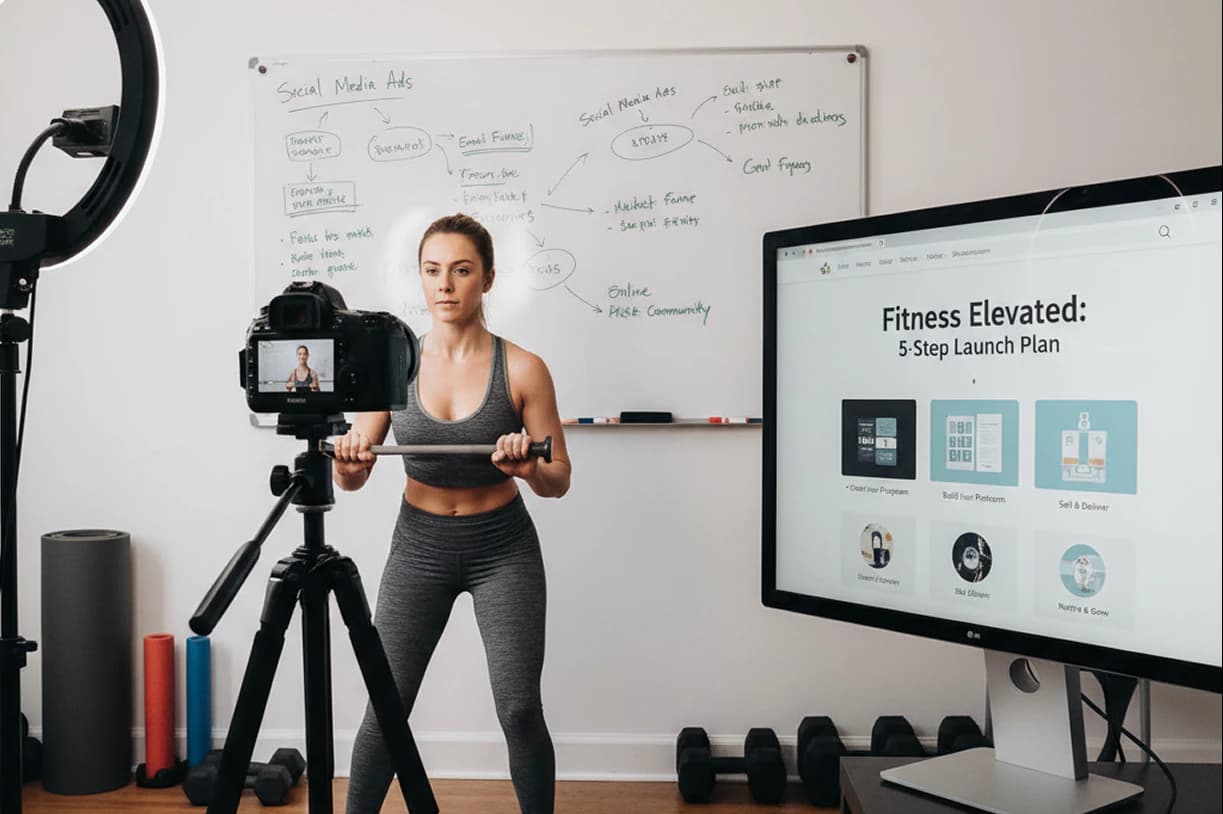
If you coach in person, your income is capped by the hours in your day. An online program lets you package what you already teach, a warm-up routine, a progression plan, the cues you repeat every session, and sell it to people you'll never meet in the gym.
People aren't buying a PDF of exercises. They're buying a plan they trust, a clear next step each day, and the feeling that someone who knows what they're doing has thought it through. Here's how to build and sell that in five steps.
1. Pick a specific niche and outcome
"Get fit" is too broad to sell. "Your first pull-up in 8 weeks", "Strength training for busy moms at home" or "Run your first 10K" tell the right person immediately that this program is for them.
Look at the questions your clients and followers ask most often. The problem that comes up again and again, and that you enjoy solving, is usually the best starting point. A narrow niche also makes marketing cheaper, because you know exactly where these people spend time online.
2. Design a program people can actually follow
Structure beats volume. Break the program into weeks, with clear sessions, sets, reps and rest times, and a simple way to progress. Include beginner alternatives for harder moves so people don't quit on day three.
Choose a format that matches how your clients train. A printable PDF or spreadsheet works for experienced lifters, while beginners often need short demo videos for every exercise. Many coaches combine both: a PDF plan plus a private video library.
Add the small things that keep people going: a habit tracker, a weekly check-in form, or a private group where members share progress. Accountability is often what separates a program people finish from one they forget.
3. Set your price and packages
Price the result, not the page count. An 8-week program that helps someone build a consistent habit is worth more than a list of workouts, even if the list is longer. Check what similar coaches in your niche charge, then position yourself honestly based on your experience and the support you include.
Consider two or three tiers. A self-guided program at an accessible price, a version with group check-ins, and a premium option with personal form feedback give buyers a choice without overwhelming them. Once someone finishes a program, offer the next level or a monthly membership so they keep training with you.
4. Build a sales page and smooth checkout
Your sales page should answer three questions quickly: who is this for, what will I be able to do after, and what does a typical week look like. Add a short video of you explaining the program, a sample workout, and before-and-after stories from real clients, shared with their permission.
Then make buying painless. A one-page checkout, local payment methods and instant access after payment keep people from dropping off. On Ferry, you can sell with VietQR and bank transfer, send automatic order confirmations, and let clients open their program anytime from the customer portal. You can also add an order bump, such as a meal-planning template or a mobility add-on, right at checkout.
5. Market with proof and helpful content
Short videos are the natural home for fitness content. Post form tips, common mistakes and quick routines on TikTok, Instagram Reels or YouTube Shorts, and point viewers to a free mini-plan in exchange for their email. That list becomes the audience for every launch.
Proof sells fitness programs better than any caption. Share client progress (with permission), run a free 7-day challenge, and collect testimonials as people complete the program. A launch discount code and a small affiliate program for happy clients can bring in new buyers through people who already trust you.
Protect your clients and yourself
An online program can't replace an in-person assessment, and you shouldn't pretend it does. Unless you're a licensed medical professional, don't give medical advice, diagnose pain or injuries, or promise specific weight-loss results.
Add a clear health disclaimer to your sales page and program materials, recommending that buyers check with a doctor before starting, especially if they are pregnant, recovering from an injury or have a health condition. A short readiness questionnaire at signup and a reminder to stop if something hurts show clients that you take their safety seriously. If you're unsure what your disclaimer should cover, it's worth asking a legal professional.
Practical tips for long-term success
Start with a beta group of five to ten people at a lower price. You'll find confusing instructions, missing alternatives and weak spots before they affect paying customers, and you'll finish with your first testimonials.
Update the program based on feedback, and tell your list when you do. Returning clients, referrals and a steady flow of results from real people will grow your business more reliably than chasing viral posts.
Conclusion
Selling fitness programs online comes down to five steps: pick a specific outcome, build a plan people can follow, price it for the result, make buying easy, and market with honest proof.
Start small with one program for one type of client. Once it works, you can add tiers, memberships and new programs, and reach far more people than your training schedule ever allowed.


List your first product in 5 minutes
Free to use, no subscription fees. Money goes straight to your bank account, and Ferry takes just 5% per successful order.
No code needed · No subscription fees · Just 5% per successful order