
How to make money podcasting in 20 simple, practical steps
A step-by-step path from choosing your podcast niche to earning from sponsors, memberships, digital products and live shows.
- Written by
- The Ferry content team
- Updated
- September 22, 2026
- Published
- June 18, 2026
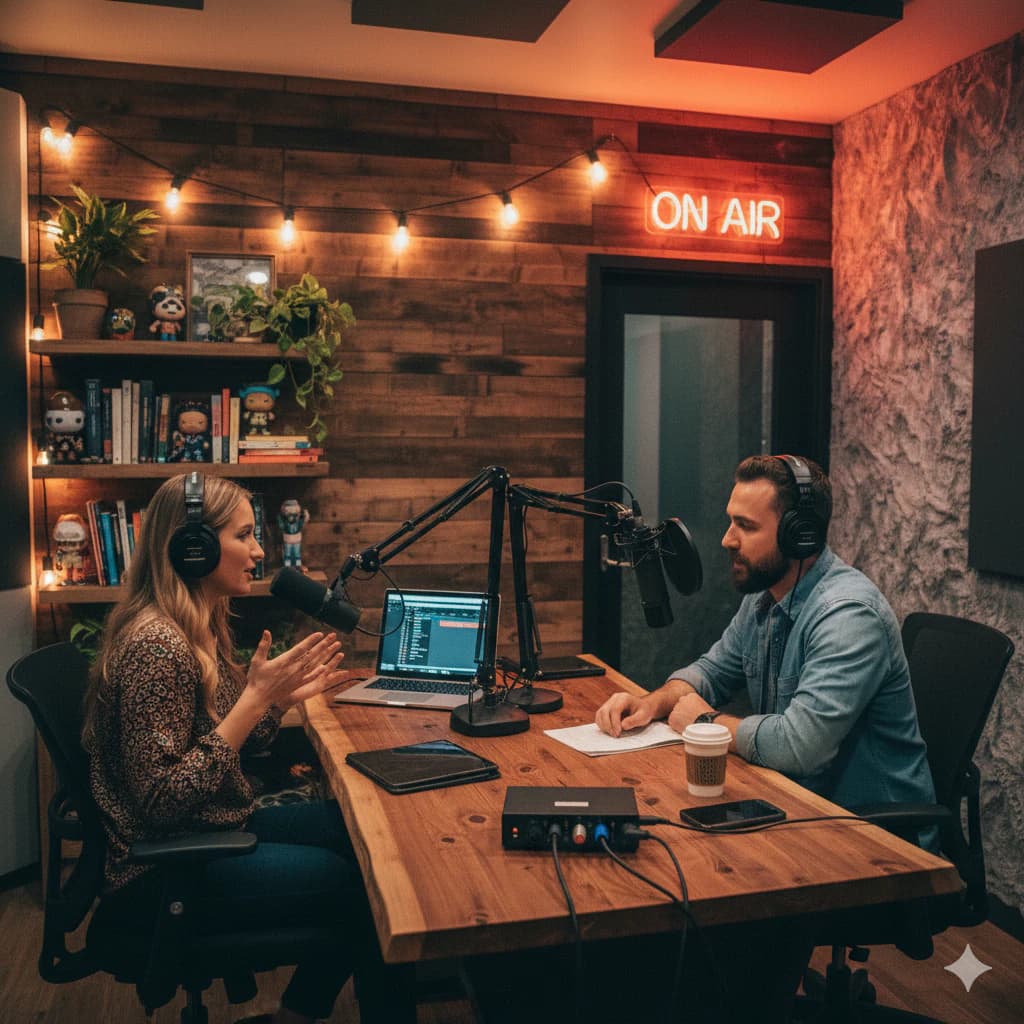
Podcasting pays when you build it step by step
Podcast listeners are some of the most loyal audiences online. They spend thirty minutes or more with you every week, often while commuting, cooking or working out. That kind of attention builds trust, and trust is what turns listeners into customers.
The catch is that downloads alone rarely pay much. The 20 steps below walk you from the foundations to the income streams, so you build a show people love and a business that supports it.
1. Choose a clear niche and listener — who is this show for?
A podcast 'for everyone' is hard to grow and even harder to monetize. Pick a specific listener, like new parents, junior developers or small café owners, and a topic they care about every week.
A clear niche makes every later step easier. Sponsors know who they're reaching, and you know exactly which products your listeners would buy.
2. Pick a format you can sustain — solo, co-host or interviews
Solo shows are easy to schedule, co-hosted shows feel like a conversation, and interview shows bring in fresh voices and their audiences. Choose the one you can realistically keep doing every week or two.
Consistency beats ambition. A 25-minute episode every week will usually grow faster than a two-hour episode whenever you find the time.
3. Start with simple equipment — sound matters more than gear
You don't need a studio. A decent USB microphone, headphones and a quiet room with soft furnishings will get you surprisingly clean sound.
Spend your first money on audio quality, not on fancy visuals. Listeners will forgive a plain cover but not a recording that's hard to hear.
4. Host and distribute — be where listeners already are
Use a podcast hosting service to publish your RSS feed, then submit it to Spotify, Apple Podcasts and other apps. In Vietnam, many listeners also discover podcasts on YouTube, so plan to be there too.
Make your show easy to find with a clear title, a description that says who it's for, and episode titles that describe the benefit rather than just a number.
5. Publish on a schedule — train your listeners
Pick a release day and stick to it. Regular publishing tells listeners when to expect you and turns your show into a habit.
Batch-record two or three episodes ahead so a busy week doesn't break your schedule. A small buffer is the easiest way to stay consistent.
6. Record video too — double your reach
A simple video version of each episode can be published on YouTube and cut into clips. Many people now watch podcasts as much as they listen to them.
One camera pointed at you and your guest is enough to start. The video version also opens up YouTube's own monetization options once your channel is eligible.
7. Turn episodes into short clips — grow on social media
Your best 30 to 60 seconds, with captions, can travel far on TikTok, Facebook Reels, Instagram and YouTube Shorts. Clips bring new listeners into full episodes.
Choose moments with a strong opinion, a surprising fact or a useful tip. End each clip with a simple invitation to listen to the full episode.
8. Build an email list — own your connection to listeners
Podcast apps don't tell you who your listeners are. An email list does, and it lets you reach them directly when you launch something.
Send a short weekly email with the new episode, one key takeaway and a link. Ferry's Campaigns can handle campaigns and automated welcome emails for new subscribers.
9. Offer a free resource — give listeners a reason to sign up
A checklist, a summary of your best episodes or a starter guide gives listeners a reason to join your list. Mention it at the start and end of each episode.
For example, a podcast about personal finance might offer a free monthly budget worksheet. Everyone who downloads it is a warm lead for future paid products.
10. Collect listener stories — build social proof early
Ask listeners how the show has helped them, and save the best replies. These stories help you pitch sponsors and sell your own products later.
A Wall of Love page on Ferry lets you display testimonials alongside your offers. Real words from real listeners are more persuasive than anything you can say about yourself.
11. Land sponsorships — sell host-read ads
Sponsors pay for a short segment, often read by you, at the start or middle of an episode. Host-read ads work because listeners trust your voice.
Prepare a one-page media kit with who your listeners are, what the show covers and how you'll present the sponsor. For niche shows, audience fit often matters more to brands than raw download numbers.
12. Recommend with affiliate links — earn from what you already use
If you mention books, tools or apps on your show, affiliate links in your show notes can earn a commission. Shopee, Lazada and many software companies offer affiliate programs.
Keep it honest and relevant. Recommend only what you'd suggest to a friend, and mention the link naturally when the topic comes up.
13. Accept listener support — let fans chip in
Many listeners are happy to support a show they love. A tip page, a VietQR code in your show notes or a small supporter plan makes it easy.
Thank supporters by name on the show if they agree. Recognition turns one-time supporters into regular ones.
14. Launch a premium membership — bonus episodes and early access
Offer paying members extra content: bonus episodes, ad-free versions, early releases or behind-the-scenes recordings. Your free show stays the same; members simply get more.
Sell the membership through your own checkout so you control the price and customer relationship. Buyers on Ferry get access through a customer portal where they can find everything they've purchased.
15. Start a paid community — connect listeners with each other
Listeners often want to talk about what they hear. A paid Discord server, private Facebook group or Zalo group gives them that space, with you as the host.
Keep it active with a weekly discussion based on the latest episode and an occasional live Q&A. The community becomes a reason to stay subscribed.
16. Sell digital products — package your best episodes
Your episodes are full of advice that can become templates, guides or workbooks. People who like listening often want something practical to act on.
A podcast about small business, for instance, might sell a pricing calculator or a marketing plan template discussed on the show. Ferry's order bumps and upsells can add a related product at checkout.
17. Teach a course or workshop — go from listening to doing
If your show teaches something, a course or live workshop helps listeners actually apply it. Your episodes already prove you can explain the topic.
Start with a paid live workshop to test interest, then turn the material into a self-paced course. Use a waitlist to gauge demand before you build.
18. Host live shows — record in front of an audience
A live recording, panel or listener meetup lets your audience see the show in person. Fans often enjoy the chance to meet hosts and other listeners.
Sell tickets online and use QR-code tickets for check-in at the door. Ferry sends them automatically after payment, so organising a small event stays manageable.
19. Offer services — coaching, consulting or production
Your podcast positions you as someone who knows the topic. That authority can lead to coaching clients, consulting projects or speaking invitations.
Your podcasting skills themselves are also valuable. Businesses that want their own show may pay you to plan, record or edit it.
20. Review, price and grow — double down on what works
Every few months, look at which income streams are working and which take too much effort for too little return. Drop the weakest, improve the strongest and test one new idea at a time.
Use discount codes for launches, checkout recovery for people who almost bought, and an affiliate program so happy listeners can recommend your products. Small improvements compound over time.
Conclusion
Making money from podcasting isn't about one big break. It's a series of simple steps: a clear niche, a consistent show, an audience you can reach directly, and offers your listeners actually want.
When you're ready to sell your first membership, product or live-show ticket, Ferry lets you start free with no monthly fee, with VietQR and bank transfer payments built in.



List your first product in 5 minutes
Free to use, no subscription fees. Money goes straight to your bank account, and Ferry takes just 5% per successful order.
No code needed · No subscription fees · Just 5% per successful order